Germany's Biggest Marathons: Berlin, Hamburg, Frankfurt, and Munich at a Glance
Four city marathons anchor Germany's running calendar: Berlin as a world major, Hamburg as the biggest spring marathon, Frankfurt as the fastest course, and Munich with its new loop route. Here's all four compared – plus what most rankings leave out.
Daniel Gruber · 31 August 2026 · 3 min read
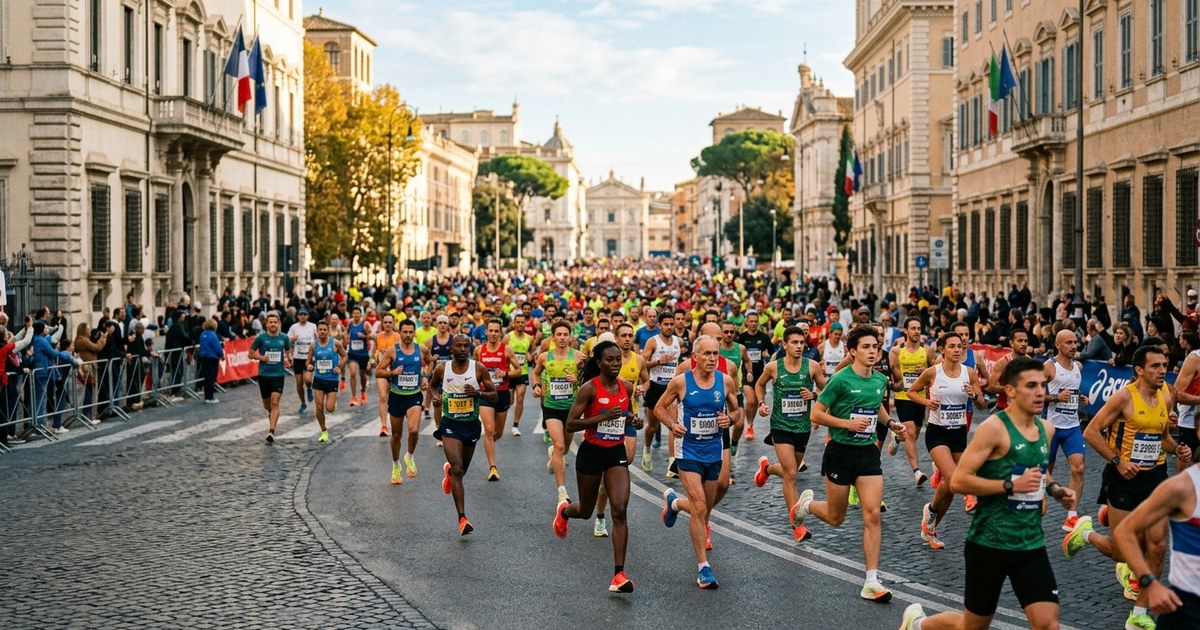
Search for "biggest marathon in Germany" and you'll almost always land on the same four names: Berlin, Hamburg, Frankfurt, and Munich. All four are well-organized city marathons with a long tradition, but they differ substantially in size, course character, and season. This overview compares the key facts side by side – and covers a point most ranking articles leave out: how to not spend the training months beforehand alone.
The big four, compared
| Marathon | Date | Field size | What sets it apart |
|---|---|---|---|
| Berlin Marathon | September 27, 2026 | Record: 54,280 finishers (2024) | Abbott World Marathon Major, one of the fastest courses in the world |
| Frankfurt Marathon | October 25, 2026 | over 17,000 (2025) | Finish inside the Festhalle, very flat course |
| Munich Marathon | October 11, 2026 | Record: around 28,500 (2025) | New single-loop course since 2025, finishing in the Olympic Park |
| Haspa Marathon Hamburg | April 25, 2027 | around 34,000 (2026) | Germany's largest spring marathon |
Berlin is by far the biggest and best known of the four – as one of the six Abbott World Marathon Majors, it draws runners from around the world and has a long-standing reputation as one of the fastest marathon courses anywhere. Frankfurt, with only about 28 meters of elevation change across the entire distance, is the flattest of the four and famous for its dramatic finish inside the Festhalle. Munich reinvented itself in 2025: instead of two similar laps, the course now runs as one continuous loop through the city, finishing in the Olympic Park. And Hamburg fills the calendar gap the other three – all held in autumn – leave open, as "Germany's largest spring marathon."
Autumn or spring: which marathon fits your season?
Three of Germany's four big marathons fall in autumn (September/October); only Hamburg runs in spring. That has real consequences for your training plan: choose an autumn marathon and you build your base over summer – for Frankfurt and Munich, that's explicitly the hottest part of the year, with its own challenges (earlier starts, more electrolytes, adjusted pace). Aim for Hamburg in April instead, and you train straight through the darkest, coldest months of the year – December through March.
What most rankings miss: the training months
Articles listing "Germany's biggest marathons" almost always focus on course records, field sizes, and registration deadlines. What they routinely skip: the real challenge isn't race day, it's the 12 to 20 weeks before it. Whichever of the four you choose – whether you're traveling in from another city or training right where the race is held – the long runs in your training plan are easier to stick with, safer, and more motivating when you don't run them alone.
That's exactly why it's worth finding a local running group early – at home while you build your base, or in the host city itself for the final days before the start. Our in-depth guides to Berlin, Frankfurt, Munich, and Hamburg each go deeper on what makes that specific marathon unique – and how to make the preparation easier.
Whether you're aiming for one of these four or a smaller, local marathon: our directory helps you find running groups in your city, so the coming training weeks happen together instead of alone.
Sources
- bmw-berlin-marathon.com/en
- en.wikipedia.org/wiki/2024_Berlin_Marathon
- frankfurt-marathon.com/en/yourrun/marathon/course
- marathonmuenchen.org/en
- hdsports.org/marathon/muenchen-marathon-feierte-rekord-mit-…
- haspa-marathon-hamburg.de/haspa-marathon-hamburg-2026-sold-…
Frequently asked questions
- Do I need a qualifying time?
- For the big German city marathons, generally not – they're open mass-participation races. There are, however, cut-off times after which the course reopens to traffic. What applies to your chosen event is in the rules on its official page.
- How far in advance do I need to enter?
- It varies a lot: some events allocate places first-come-first-served, others by ballot, others again through tour-operator allocations or charity places. There's no universal deadline – only the official event page is reliable.
- Which of the big marathons suits a first one?
- The season matters more than the brand: an autumn date puts your long runs in summer, a spring date moves them into cold and darkness. Pick the event whose training months fit your life – that shapes the build-up far more than the course profile or crowd size.