Blisters From Running: Why They Form, How to Prevent Them, and What Actually Helps
Blisters are one of the first painful lessons many runners learn – usually right before a first long run or race. Most of them are avoidable with a few simple adjustments to shoes, socks, and lacing, long before a blister plaster ever comes into play.
Daniel Gruber · 3 August 2026 · 6 min read
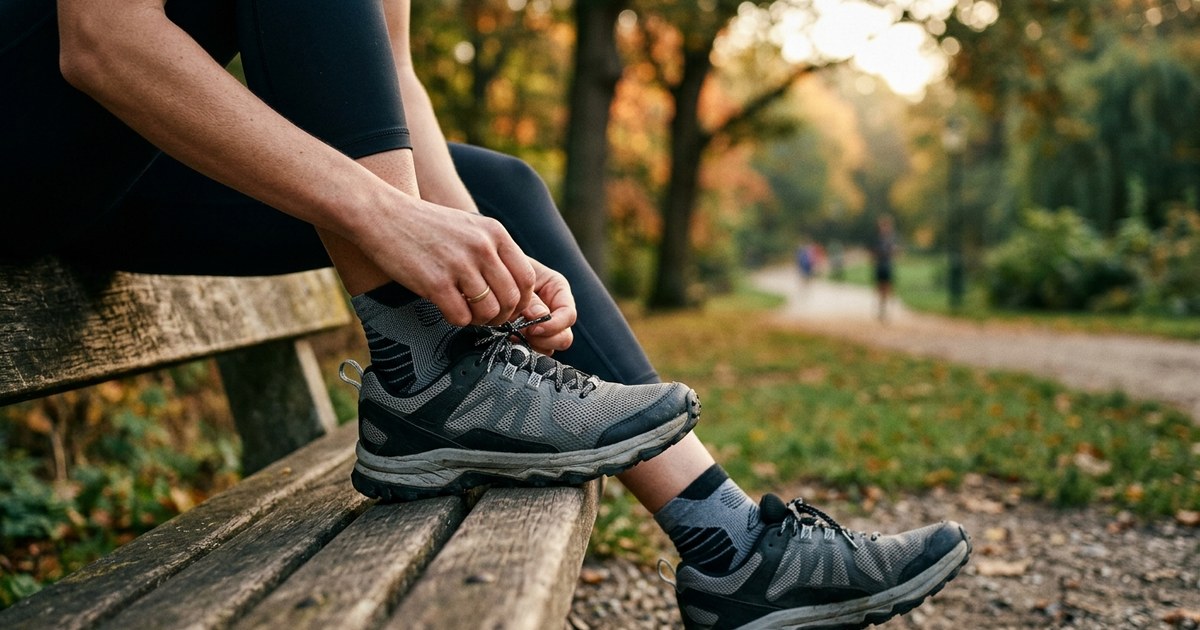
Why blisters form in the first place
Blisters almost always come down to three factors working together: friction, moisture, and heat (Brooks Running 2024). Friction is the real trigger: with every step, the ground pushes your shoe backward, your shoe pushes your sock, and your sock pushes your skin – then the direction reverses on push-off. That small, out-of-sync movement between bone, soft tissue, sock, and shoe creates shearing forces on the skin, and the body responds by forming a fluid-filled pocket between skin layers – the blister itself (CTS/TrainRight 2024). Moisture, mostly sweat, softens the top layer of skin and makes it more vulnerable to that shearing, while heat makes feet swell and pushes friction even higher (Brooks Running 2024).
On top of that sit some very practical triggers: shoes that are too tight or too loose, seams that sit right on a pressure point, socks that slip or bunch up, and brand-new shoes that haven't been broken in yet (ASICS 2024; Princeton Sports Medicine 2024).
The overlooked lever: knowledge from your running group
Most blister guides start exactly where it already hurts: plasters, blister balm, specialised tape for a foot that already has an open spot. That helps once damage is done, but it doesn't solve the actual problem. The most effective prevention happens earlier – in shoe choice, sock choice, and lacing – and that's exactly where experienced members of a running group are often faster to help than any guide online.
Spend a bit of time running with a group and you'll notice quickly: someone has almost always already had the exact blister on the little toe or heel that you're now worried about – and knows from firsthand experience which shoe brand rubs where, which sock seam chafes, or which lacing trick actually helps. This is no substitute for proper fitting advice at a running store, and it's certainly not medical expertise – but it's free, very concrete, lived experience, tested on real feet. That's exactly why it's worth asking the group before your first long run, not after the blister has already shown up.
Getting the shoe right and breaking it in
Fit does most of the work: there should be enough room in the forefoot for toes to move freely – a rough rule of thumb is about a thumb's width between the big toe and the front of the shoe, since the foot slides forward on downhills. The heel, by contrast, should sit snugly so it doesn't slip during toe-off (ASICS 2024; running-physio.com 2024). How to actually find that fit is covered in detail in Laufschuhe für Anfänger.
Even a shoe that fits well shouldn't debut on race day or a first long run. Most shoes need a handful of shorter, easy runs – often spread over two to three weeks – before the material and your foot have adjusted to each other (Runner's Blueprint 2024; Altra Running 2024). A realistic plan: a few kilometres of everyday wear or short runs first, then gradually longer distances. If a shoe keeps rubbing or pressing in the same spot the whole time, that's not a "break-in issue" – it's usually a sign of the wrong fit or size (Altra Running 2024).
Socks, lubricant, and tape
Cotton socks hold onto moisture and make blisters more likely. Socks made from synthetic fibres or merino wool wick sweat away from the skin and keep the foot noticeably drier (Brooks Running 2024; ASICS 2024). Fit matters here too: socks that are too big or bunch up when you put them on create extra friction surfaces inside the shoe.
At known trouble spots – often the heel, little toe, or ball of the foot – a thin layer of lubricant like petroleum jelly or a dedicated anti-chafing balm (such as BodyGlide), applied before running, helps a lot (Princeton Sports Medicine 2024). Alternatively, or in addition, taping the spot with blister tape or moleskin before a blister ever forms works well – some tapes reduce friction through an extremely smooth surface, others absorb the shearing forces directly (fellrnr.com 2024). If you feel a so-called "hot spot" during a run – a warm, burning spot before a blister actually forms – stop briefly and treat it with tape or lubricant right away instead of running on and hoping it settles down (ASICS 2024).
The lacing fix: heel lock
One often-overlooked lever is the lacing itself. The heel-lock (or "lace-lock") technique uses the extra eyelets near the top of the shoe: after lacing normally in a criss-cross pattern, the lace on each side is threaded through the top eyelet to form a small loop, the two ends are then crossed and pulled through the opposite loop, and only then pulled snug and tied off (KURU Footwear 2024). The result is a heel that sits noticeably more secure in the shoe without needing to over-tighten the rest of it – less heel slip means less friction, and less friction means fewer blisters, especially on longer runs or uneven terrain.
If a blister forms anyway
If the blister is small and not especially painful, it's usually best left alone: the fluid underneath protects the exposed skin layer and helps prevent infection, and an intact blister typically heals on its own within three to seven days (Mayo Clinic 2024). Only when a blister is large, tense, and painful, or bound to tear open anyway, is controlled draining worth it: disinfect the skin first, pierce the edge (never the centre) with a sterile needle, gently press the fluid out, and leave the overlying skin in place as a natural cover. Then apply a thin layer of antibiotic ointment and a non-stick dressing (Mayo Clinic 2024).
Afterwards, it's worth watching for signs of infection: spreading redness or warmth beyond the blister's edge, swelling, cloudy or yellowish fluid instead of clear, and pain that increases rather than eases after the first day. If any of that shows up – or if fever or a general feeling of illness sets in – it's time for medical or podiatric advice rather than continuing to manage it yourself (Mayo Clinic 2024).
Once the basics around shoes, socks, and lacing click into place, blisters mostly stop being something you have to think about before a long run. For more on finding the right shoe, see Laufschuhe für Anfänger – and if you're looking for a running group to swap exactly this kind of firsthand experience with, the Übersicht is a good place to start.
- Break shoes in gradually Don't debut new shoes on your first long run or race. Give feet and materials two to three weeks of shorter, easy runs to adjust – if a shoe keeps pressing on the same spot, that's a fit problem, not a break-in phase.
- Choose the right socks Wear synthetic or merino socks instead of cotton so moisture gets wicked away from the foot. Check the fit – socks that are too big or bunch up create extra friction surfaces.
- Apply lubricant or tape at trouble spots Rub a thin layer of petroleum jelly or anti-chafing balm onto known pressure points like the heel, little toe, or ball of the foot before running, or pre-emptively cover them with blister tape or moleskin.
- Use heel-lock lacing After lacing normally in a criss-cross pattern, thread the lace through the top eyelet into a loop on each side, cross the ends through the opposite loop, and pull snug – this cuts down heel slip and the friction that comes with it.
- Treat hot spots the moment you feel them As soon as a warm, burning spot shows up mid-run, stop briefly and cover it with tape or lubricant right away instead of running on.
- Leave an intact blister alone If the blister is small and not very painful, don't pop it – the fluid underneath protects the skin. It typically heals on its own within three to seven days.
- Drain a large blister carefully and watch for infection Only for large, painful blisters: disinfect the skin, pierce the edge with a sterile needle, gently press out the fluid, leave the overlying skin in place, then cover with antibiotic ointment and a non-stick dressing. Seek medical advice if redness spreads, swelling increases, fluid turns cloudy, or pain persists.
Sources
- brooksrunning.com/en_us/blog/advice-tips/causes-of-running-…
- trainright.com/running-blisters-prevention-treatment-and-he…
- asics.com/gb/en-gb/running-advice/how-to-prevent-blisters-w…
- princetonmedicine.com/blog/preventing-blisters-while-runnin…
- running-physio.com/blisters
- fellrnr.com/wiki/Blister_Prevention
- kurufootwear.com/blogs/articles/heel-lock-lacing
- mayoclinic.org/first-aid/first-aid-blisters/basics/art-2005…
- runnersblueprint.com/break-in-running-shoes
- altrarunning.com/en-us/blogs/run-better-blog/how-to-break-i…
Frequently asked questions
- Does wearing two pairs of socks help?
- For some people, yes – the idea is that the friction happens between the two layers instead of against your skin. The cost is extra volume in the shoe, which changes the fit and can press somewhere else. Try it in training, never for the first time on race day.
- Why do I always get a blister in the same spot?
- Because something rubs there systematically – usually fit, lacing or how your foot rolls, not bad luck. A recurring spot is information, not coincidence: check shoe size and fit, pad that specific area, and see whether it disappears in a different pair.
- How long should I rest until a blister has healed?
- As long as you can still feel it while running – there's no fixed number. Small blisters often stop bothering you quickly; open ones take longer because the skin underneath has to regrow. Better a few easier days than repeatedly tearing an irritated patch open.
- When should I see a doctor about it?
- If the area becomes infected: spreading redness, warmth, swelling, pus or throbbing pain – and likewise with a fever. If you have diabetes or known nerve damage in your feet, blisters should be looked at professionally rather than treated yourself.