Winter Running: Motivation, Clothing, and Safety for the Cold Season
Short days, cold air, and early darkness make winter the toughest season to stay motivated to run – on top of real safety questions like visibility in the dark and slipping on ice. This guide covers how to dress right, stay safe, and why a fixed running group is the simplest fix for both.
Daniel Gruber · 24 September 2026 · 5 min read
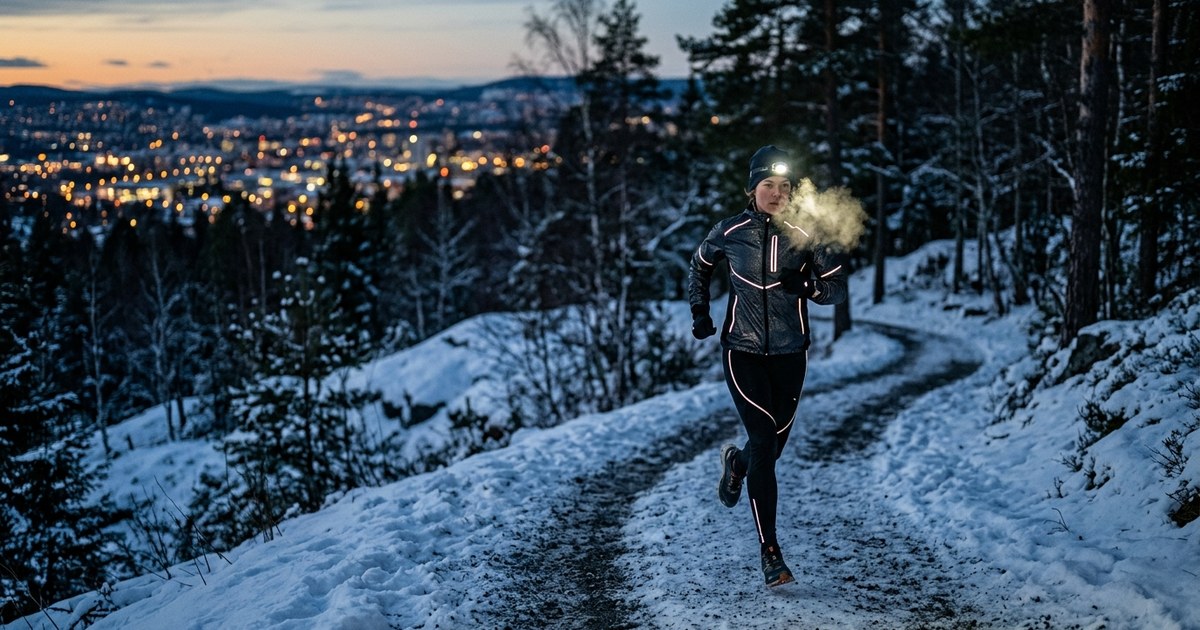
Why Motivation Collapses in Winter
Short days, cold air, darkness by late afternoon: most runners recognize the moment the momentum built in autumn evaporates. According to RunnersConnect, people don't quit their winter running routine because they run out of energy – weather, light, and motivation gang up on them all at once (Source: RunnersConnect, 2025). There's a reassuring flip side, too: an analysis comparing marathoners from snowy Hokkaido with runners from southern Japan found no significant difference in race performance between the two groups, even though the Hokkaido runners saw a real seasonal drop in mileage – as long as the crucial 12-to-16-week build-up before the race held up (Source: Outside Online, 2025). Winter isn't a lost chapter of the training year. It's just the hardest one.
What actually counteracts the slump is rarely willpower alone. RunnersConnect points to a fixed running partner or group, because social commitment covers the gap when internal drive won't (Source: RunnersConnect, 2025). The logic is simple: a plan someone else expects you to show up for gets cancelled far less often than one that only exists in your own head.
Dressing Right: The Three-Layer System
The most common winter mistake isn't underdressing – it's overdressing. The rule of thumb from several running specialists: dress as if it were 10 to 20°F – roughly 6 to 11°C – warmer than the actual temperature outside (Source: Fleet Feet, 2024). The first few minutes will feel cool; once your body starts generating heat from moving, that's exactly the point. Starting out already warm just means heavier sweating and a colder finish.
A three-layer system works well:
| Layer | Purpose | Examples |
|---|---|---|
| Base layer | Wicks moisture away from skin | Merino wool or synthetic technical fabric – never cotton |
| Mid layer | Traps heat without overheating | Light fleece, thin synthetic-fill or down jacket |
| Outer layer | Blocks wind, rain, snow | Wind- and water-resistant running jacket with underarm or back vents |
| Extremities | Limits heat loss at head, hands, feet | Hat or headband, thin running gloves, tall socks |
The mid layer should sit slightly looser than the base layer, so it traps a pocket of warm air while still allowing full range of motion (Source: Brooks Running, 2024). On very cold or wet days, the outer layer matters most – it needs to be breathable enough to let moisture escape from the inside.
Visibility and Safety in the Dark
Across Germany, Austria, and Switzerland, winter afternoons slide straight into darkness – if you run after work, you're running in the dark. That makes visibility the season's single biggest safety issue. Reflective fabric works through retroreflection: tiny glass beads or prisms embedded in the material bounce headlight beams straight back to their source. The difference is dramatic – reflective clothing gets runners noticed from roughly 150 meters away, versus just 15 to 30 meters in dark clothing (Source: Running Warehouse, 2025).
For the darkest months, this combination works best:
- A reflective vest or jacket – a large, unmistakable shape
- Blinking safety lights on an arm or your back – motion catches attention faster than a static reflector
- A headlamp of at least 200 lumens with a wide beam, so you can actually see the surface underfoot (Source: REI, 2025)
- Reflective bands on arms or ankles, so drivers read the moving limbs as a person, not just a light
One caveat: a light alone isn't enough. A beam without reflective clothing isn't reliably read by drivers as a person at all – only the combination of light and reflector actually makes you visible (Source: Running Warehouse, 2025).
Staying Upright on Ice and Snow
On snow-covered or icy ground, technique decides whether you stay on your feet. The advice that shows up again and again: shorten your stride and pick up your cadence. Landing almost directly under your body instead of reaching out in front reduces the sideways force that causes a slip (Source: Marathon Handbook, 2025). Shorter, lighter steps also mean less time and less force on each foot strike – and less opportunity to slide (Source: Run to the Finish, 2024).
A few more things help:
- Trail shoes or a model with deeper lugs instead of smooth road soles
- Familiar, well-lit routes instead of unknown shortcuts
- On genuinely glassy ice: move the session to a gym or treadmill – no run is worth a broken wrist
- Telling someone your route and expected return time
The One Fix for Both Problems: Run With Others
Most winter guides treat visibility, ice, and motivation as three separate problems. In practice, they share one solution. Running in a group makes you more visible by default – more moving reflectors, more lights, more attention from drivers. On slippery ground, someone in a group notices if a person slips or falls behind; running alone, there's a real chance nobody notices in time. And a fixed time with other people is exactly the social commitment RunnersConnect points to as the antidote to winter motivation dips (Source: RunnersConnect, 2025) – knowing someone's waiting at the meeting point makes it much harder to bail.
Just as summer running mostly comes down to managing heat and fluids (see Running in the Heat), winter running comes down to safety plus accountability. A weekly running event with a fixed time won't replace a good jacket – but it's what actually gets the jacket out the door again in January.
Looking for a running group that still shows up in winter? Check the overview for events and communities near you – whether the sun's out or it's already dark by five.
- Check the weather and plan your layers Look at temperature, wind, and precipitation, then dress as if it's 10 to 20°F (6 to 11°C) warmer than the actual temperature – feeling slightly cool for the first few minutes is normal (Source: Fleet Feet, 2024).
- Put on three layers A base layer of merino or technical fabric, a slightly loose mid layer for warmth, and a wind- and water-resistant outer layer – plus a hat, thin gloves, and tall socks to limit heat loss at your extremities.
- Make yourself visible Put on a reflective vest or jacket, clip a blinking safety light to an arm or your back, and wear a headlamp of at least 200 lumens once it's dark (Source: Running Warehouse, 2025; REI, 2025).
- Share your route and return time Stick to familiar, well-lit routes and tell someone which way you're going and how long you'll be – especially important once it's dark by mid-afternoon.
- Read the surface On snow or ice, shorten your stride and pick up your cadence so your foot lands almost directly under your body; on genuinely glassy ice, move the session to a treadmill or gym instead (Source: Marathon Handbook, 2025).
- Warm up indoors first Spend a few minutes on a dynamic warm-up inside before heading into the cold – stiff, cold muscles are more injury-prone below freezing.
- Change out of wet layers fast Swap a damp base layer for dry, warm clothing quickly after finishing, so you don't chill down right after sweating.
- Lock in a fixed time with others Set up a weekly running event or a standing meeting point with other people – social commitment is the most effective lever against the winter motivation slump (Source: RunnersConnect, 2025).
Sources
- fleetfeet.com/blog/winter-running-and-layering-tips
- brooksrunning.com/en_us/blog/advice-tips/layering-up-for-wi…
- runningwarehouse.com/learningcenter/gear_guides/apparel/sta…
- rei.com/learn/expert-advice/running-at-night-tips.html
- marathonhandbook.com/running-on-ice
- runtothefinish.com/running-on-ice-tips
- runnersconnect.net/winter-running-motivation
- runnersconnect.net/winter-training
- run.outsideonline.com/training/snowed-in-dont-worry-about-t…
Frequently asked questions
- Is there a temperature at which I should stay indoors?
- Wind, wet and the state of the paths decide more than the number on the thermometer. Sharp cold on dry ground is very manageable; drizzle around freezing on slick paths is both unpleasant and risky. If you're unsure, a shorter loop close to home beats skipping the run entirely.
- Is cold air bad for my airways?
- For most healthy people, running in the cold is unproblematic – air is warmed and humidified on its way to the lungs. A buff over mouth and nose helps if your chest feels scratchy. Anyone with asthma or a respiratory condition should agree an approach for cold weather with their doctor.
- Do I need winter running shoes or spikes?
- On cleared paths your normal running shoe is fine, ideally with a slightly chunkier tread. Spikes or chains only pay off once you're regularly on packed snow or ice – on bare tarmac they feel unpleasant and wear out fast.